Architecture
puml is organized around one rule: source text is canonical. Everything else — AST, model, scene, SVG — is a deterministic projection of the source.
The diagrams below were authored in PUML syntax and rendered with puml itself — a self-hosting stress test that also exposes layout bugs. Source files live in docs/diagrams/; SVG outputs are committed alongside them.
Component overview
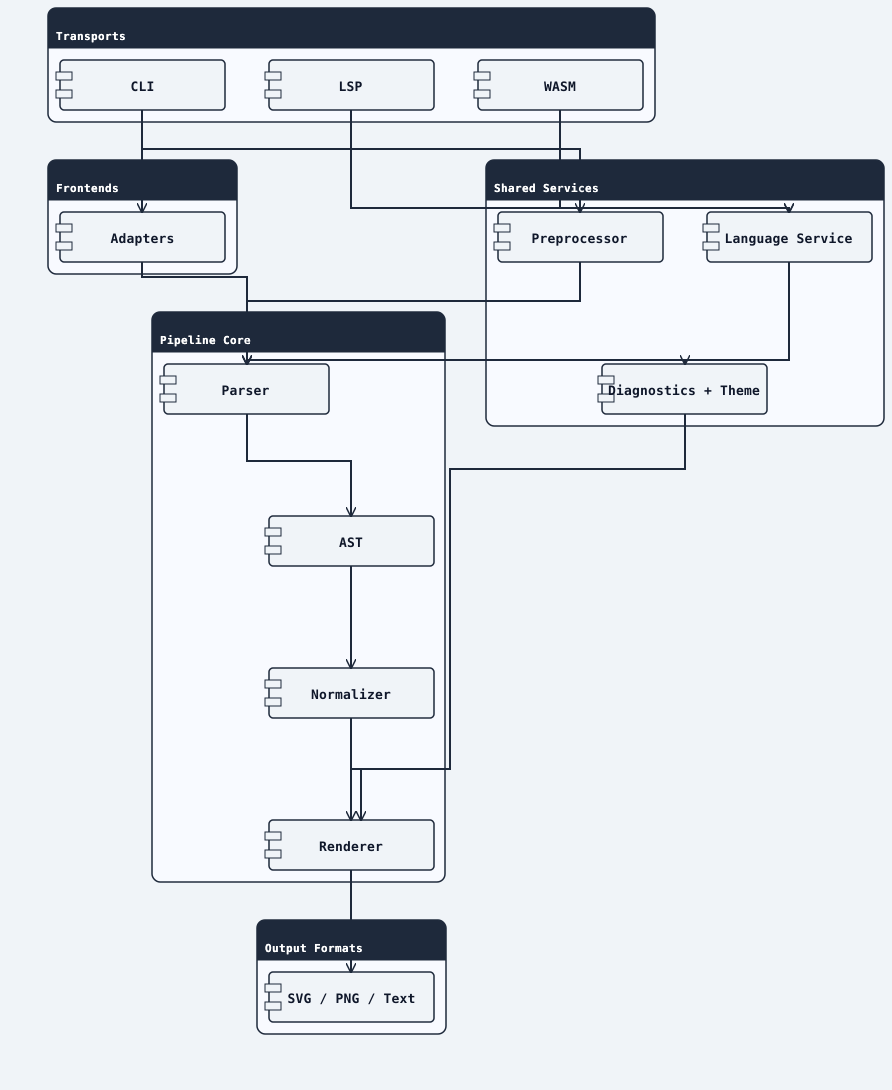
The high-level structure: Frontends translate source into a shared internal form; the Pipeline Core preprocesses, parses, normalizes, and renders; Transports (CLI, LSP, WASM) all drive the same pipeline.
Request pipeline
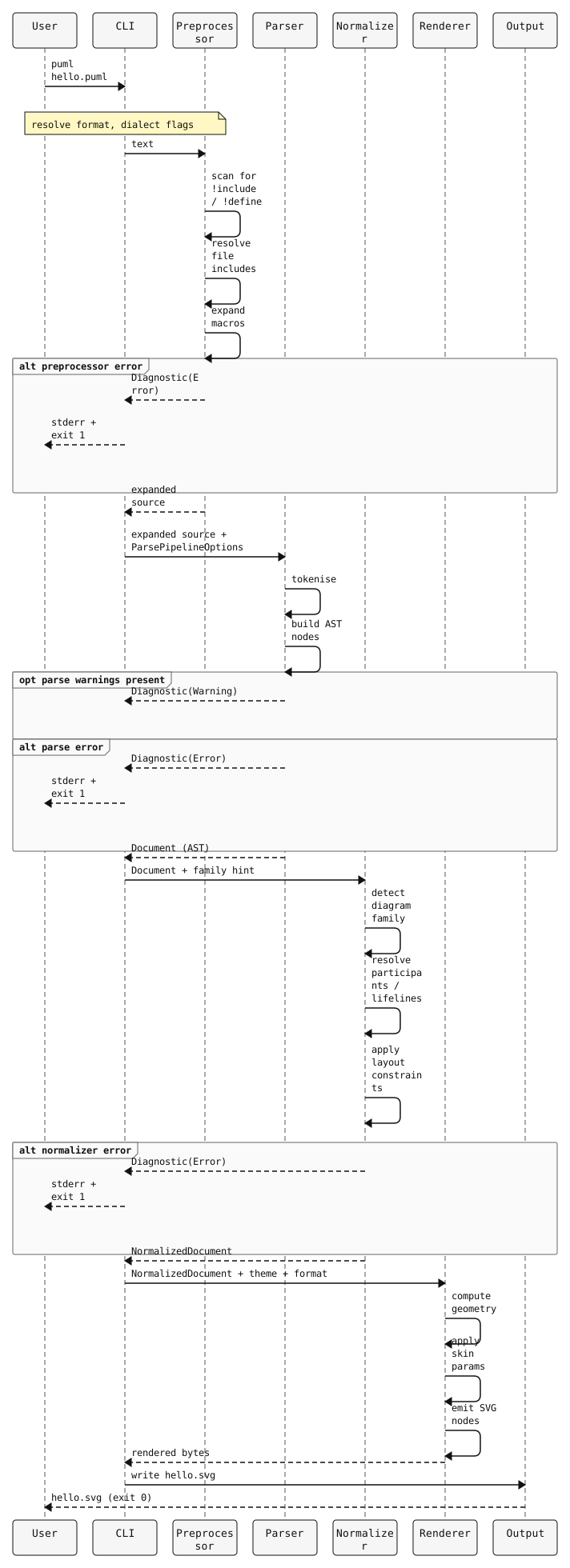
The exact call sequence for puml hello.puml — from source text through preprocessor, parser, normalizer, and renderer to SVG output. Error paths show where diagnostics are emitted.
Language service layers
The language_service module provides hover, completion, semantic tokens, format, and diagnostics. All four surfaces (LSP, WASM, CLI, VS Code) consume these types through thin transport adapters.
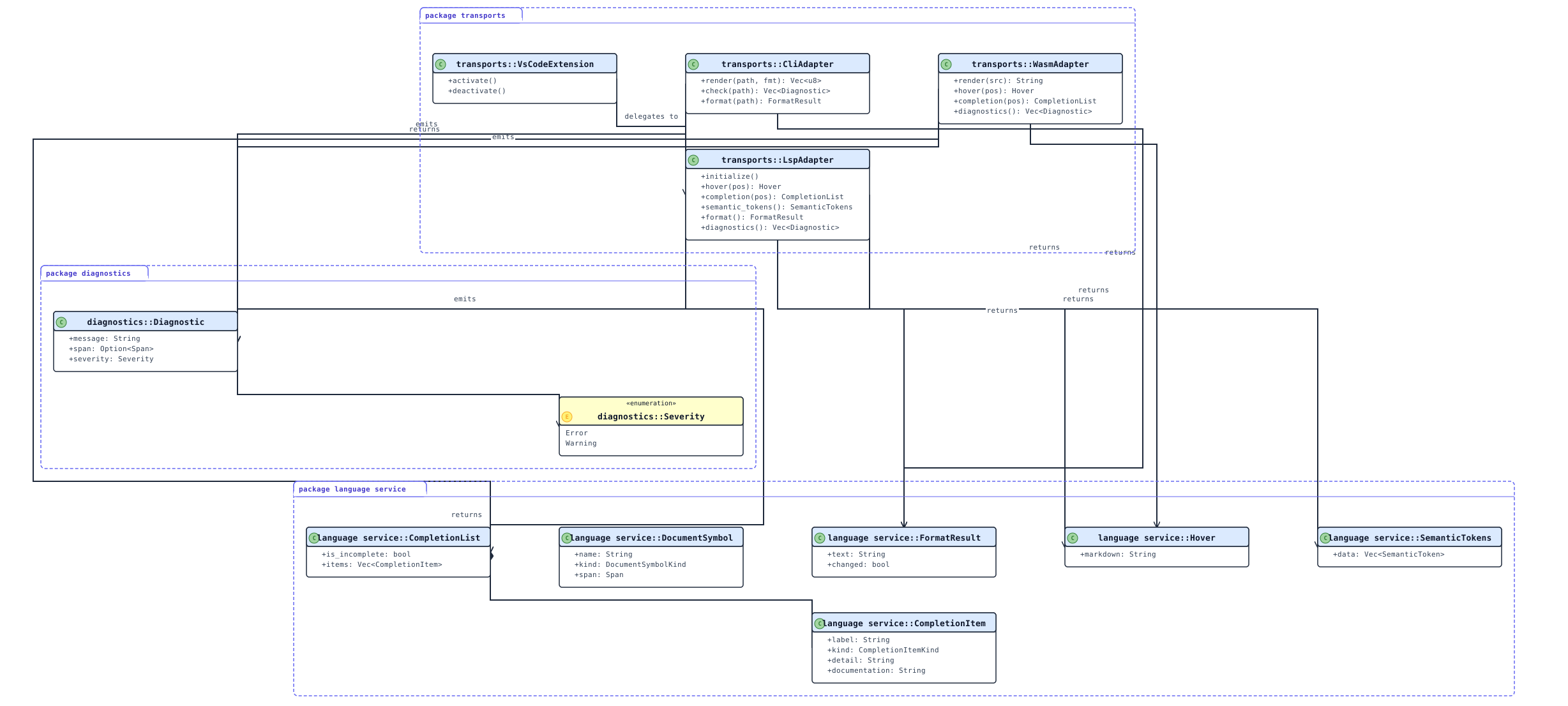
Diagram family lifecycle
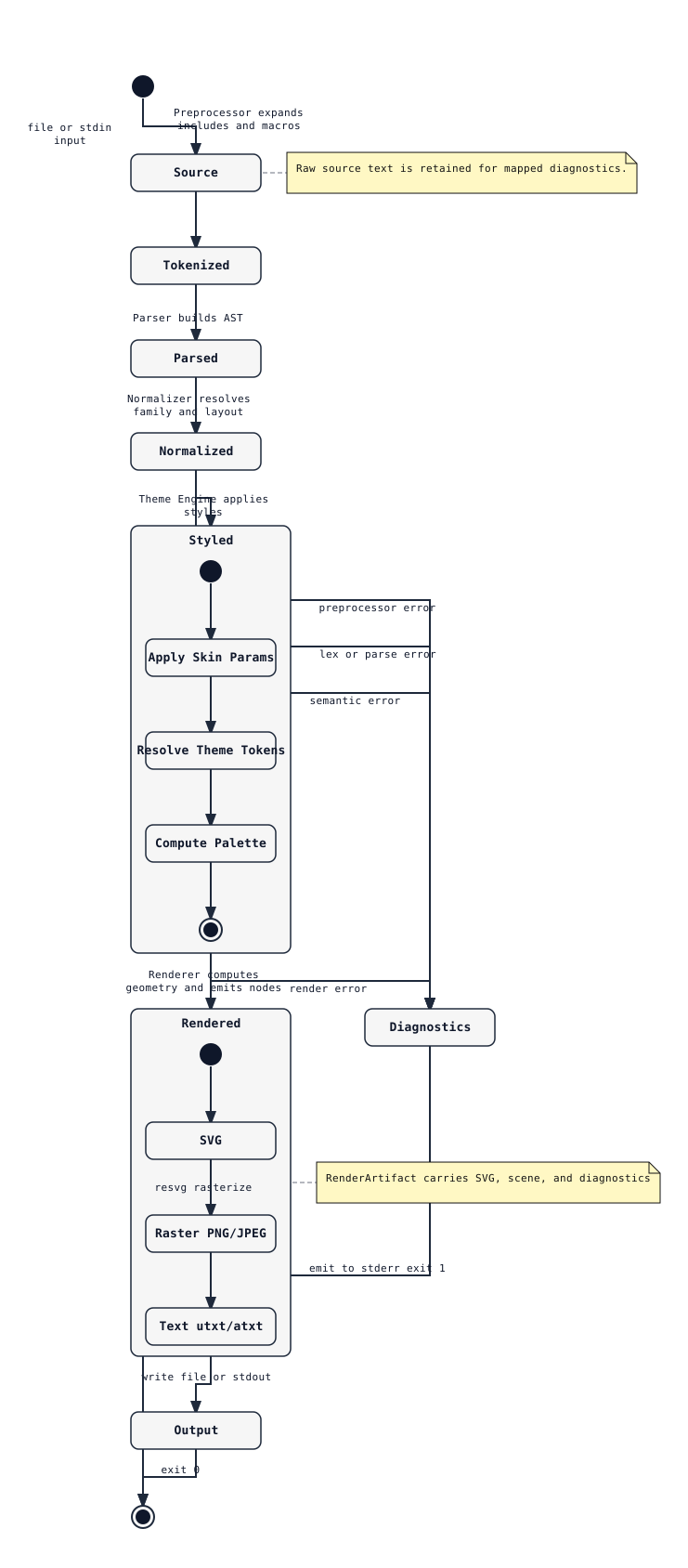
The state machine a single diagram traverses: Source → Tokenized → Parsed → Normalized → Styled → Rendered → Output, with error transitions to a Diagnostics terminal at any stage.
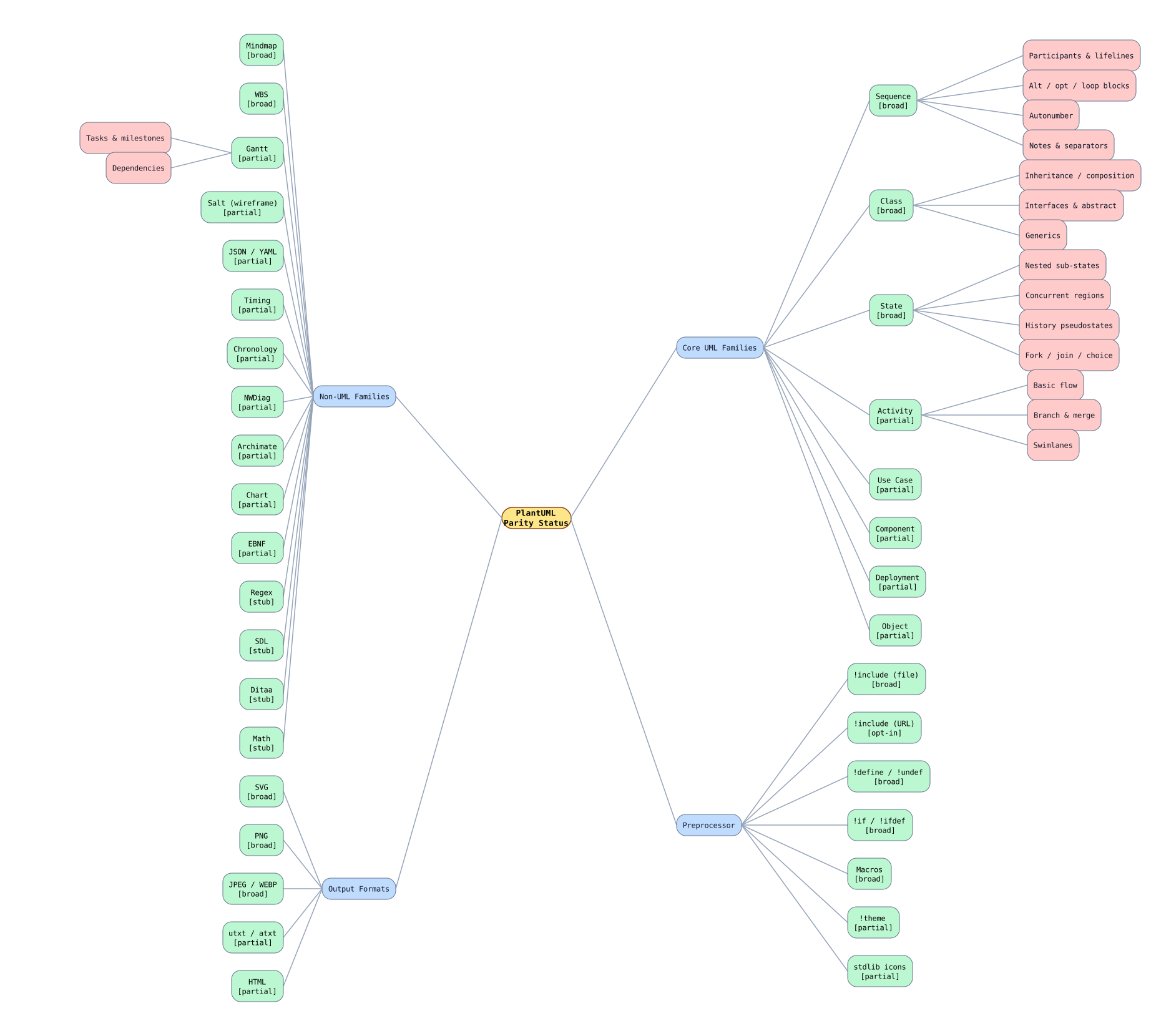
Parity status
Implementation depth across all diagram families and feature areas.
Crate layout
The repository is a single workspace crate today, with module-level seams that make a future split into sub-crates straightforward.
src/
  ast.rs           parsed syntax tree
  parser.rs        winnow-based PlantUML / PicoUML parser
  normalize.rs     AST -> normalized model (dialect-independent)
  model.rs         canonical semantic model (Sequence/State/...)
  layout.rs        layout primitives shared by family renderers
  scene.rs         scene graph consumed by the SVG emitter
  render.rs        per-family deterministic SVG emitters
  creole.rs        PlantUML "creole" rich-text parser
  diagnostic.rs    error codes, severity, JSON schema
  source.rs        spans and source-region utilities
  theme.rs         token bag for skinparams / themes
  specialized.rs   non-UML families (json/yaml/regex/...)
  cli.rs           CLI argument plumbing
  main.rs          puml binary entry point
  bin/puml-lsp.rs  LSP server binary entry point
Module boundaries
The boundaries are enforced by code review and tests:
- Parser never makes layout decisions. It returns a span-rich AST or a diagnostic.
- Normalizer turns dialect-specific shapes into a single canonical model. PlantUML, PicoUML, and Mermaid all flow through here.
- Model is the language-independent representation. Every family renderer reads from the model and never from the AST.
- Layout is pure geometry. It does not emit SVG.
- Render is pure SVG emission. It does not invent geometry.
Determinism
The engine guarantees byte-identical SVG output for identical inputs. This is the single most important property of the project; many design choices follow from it:
- No hash-based iteration over unordered collections.
- No system clock, no environment lookups, no random IDs.
- Floating-point values rounded with a deterministic strategy at the layout/render boundary.
- Theme tokens are folded into the output, not left for downstream CSS.
Diagnostics
Every error and warning carries a stable code (e.g. E_PICOUML_MARKER_MIXED). The full set is enumerated in src/diagnostic.rs. The JSON schema is documented in the CLI reference and used by editor integrations and the LSP.
What’s not in-process today
- A standalone
puml-syntaxcrate for textmate / tree-sitter grammars — tracked in the syntax highlighting spec. The studio editor uses a CodeMirrorStreamLanguage(insite/static/js/puml-lang.js) until that crate exists.
The rendered Markdown fence previews on this site are separate from syntax highlighting. They hydrate supported puml, plantuml, picouml, and mermaid fences in the browser and call the real puml-wasm renderer with the fence language as a frontend hint, so preview correctness comes from the engine rather than the temporary CodeMirror highlighter.
The renderer itself is shipped end-to-end: native via the CLI and in-browser via WASM. See In-browser renderer for the puml-wasm bridge.